Best sheet mask for glowing skin
Sheet masks have become one of the most popular skincare products for good reason. These thin fabric sheets soaked in concentrated serum deliver active ingredients directly to your skin in just 15 to 20 minutes. You can target specific concerns like dryness, dullness, acne, or aging without adding multiple steps to your routine. The variety of options available means you can find masks that work for any skin type and budget.
Using sheet masks regularly gives your skin a quick boost of hydration and nutrients that show visible results. This guide helps you understand what makes a quality sheet mask, how to choose the right one for your needs, and how to use it correctly for the best outcomes.
What Makes a Sheet Mask Good
A good sheet mask needs the right fabric that fits your face and stays in place. Bio-cellulose and hydrogel materials work better than cotton because they help ingredients absorb into your skin. The fabric should feel soft and comfortable during use.
The serum amount matters a lot. Quality masks contain at least 20ml of serum to keep the sheet moist for 15 to 20 minutes. The mask should feel wet when you apply it, not dry or barely damp. Active ingredients determine the results you get. Hyaluronic acid hydrates dry skin. Niacinamide brightens and evens out your skin tone. Vitamin C reduces dullness. Peptides smooth fine lines. Natural extracts like aloe vera and green tea calm redness and irritation.
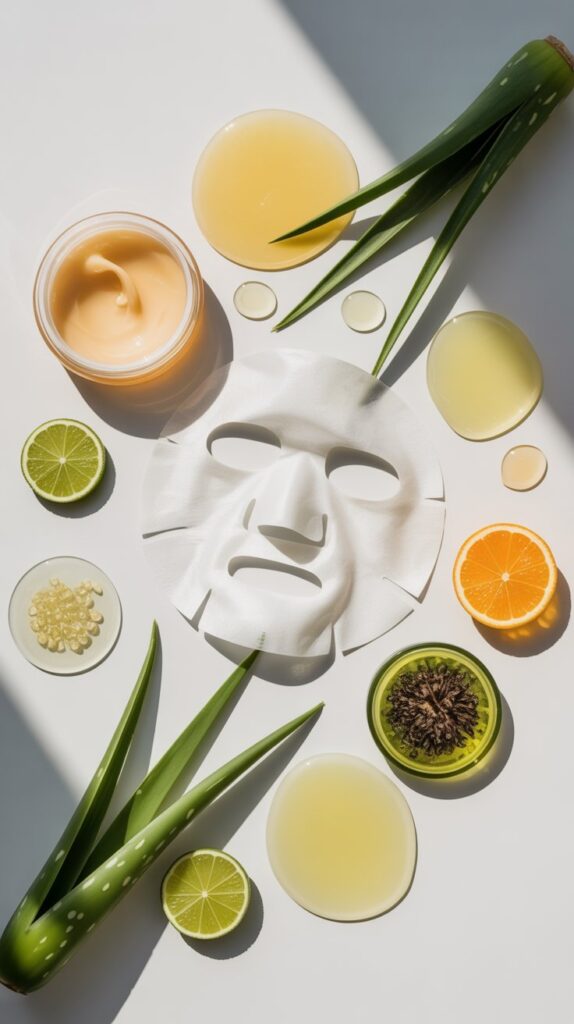
The mask should fit most face shapes with proper cuts around your eyes, nose, and mouth. Poor-fitting leaves gaps that let air in and dry out the serum. Good masks have flaps you can adjust for full coverage. Skip masks with too much alcohol and artificial fragrance. These ingredients can dry out or irritate your skin. Check the ingredient list for gentle, skin-friendly components that match your skin type and concerns.
Top Sheet Masks You Can Try
Mediheal N.M.F Aquaring Ampoule Mask delivers intense hydration for dry skin. This mask uses hyaluronic acid to pull moisture deep into your skin and keep it there for hours. Your face feels soft and plump after just one use.
Dr. Jart+ Dermask Water Jet Soothing Hydra Solution calms irritated and red skin quickly. The cooling hydrogel feels nice on your face and works well for sensitive skin. This mask reduces redness and gives your skin a refreshed look.
Innisfree My Real Squeeze Mask offers different options like tea tree, aloe, and rice. Each type targets specific skin needs. Tea trees contain oil that helps control acne. Rice brightens dull skin. Aloe soothes and hydrates simultaneously.
Kose Clear Turn Princess Veil Rich Moist Mask contains collagen and royal jelly that make your skin feel plump and smooth. This mask helps reduce the look of fine lines caused by dehydration. Your face feels deeply moisturized after removing it.
Leaders Insolution AC Dressing Skin Clinic Mask treats breakouts and prevents new pimples. Tea tree oil and salicylic acid unclog pores and reduce inflammation. People with acne-prone skin see clearer results with regular use.
The Face Shop Real Nature Mask provides affordable options that actually work. You can choose masks based on your needs, like cucumber for hydration, green tea for oil control, and pomegranate for brightness. Each mask costs less than two dollars.
Tony Moly I’m Real Mask Sheet comes in fun packaging with effective ingredients. The red wine version has antioxidants for aging skin. The avocado option deeply nourishes dry patches. These budget masks give you good results without spending much money.
How to Use Sheet Masks Correctly
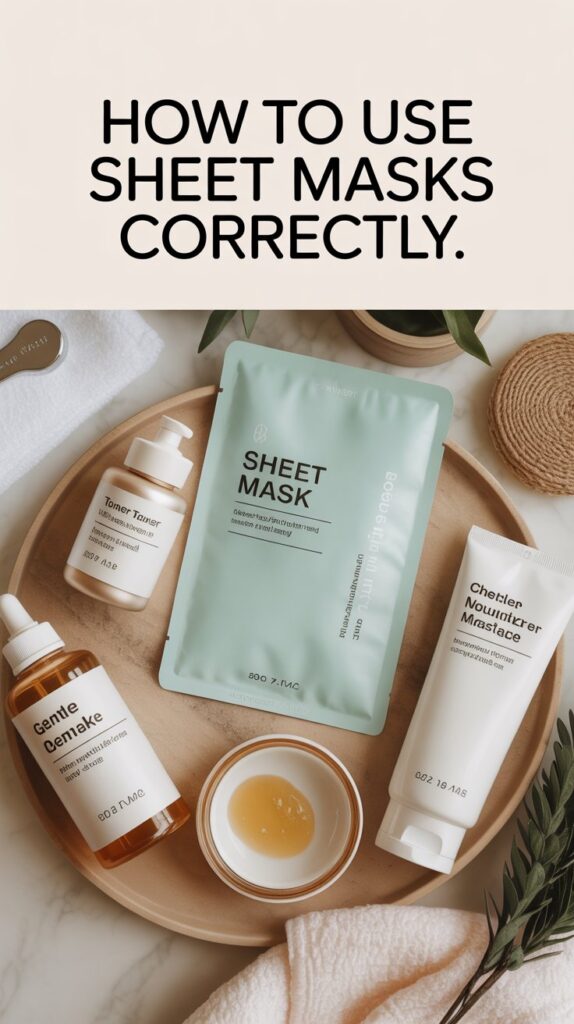
Step 1: Cleanse Your Face. Wash your face with a gentle cleanser to remove dirt, oil, and makeup. Pat your skin dry with a clean towel. Starting with clean skin helps the serum absorb better.
Step 2: Apply Toner. Use a toner to balance your skin’s pH and prep it for the mask. This step helps the active ingredients penetrate deeper into your skin.
Step 3: Open and Unfold the Mask. Take the sheet mask out of the packet carefully. Unfold it gently and check which side goes on your face. Some masks have a protective film you need to peel off first.
Step 4: Apply to Your Face. Start by placing the mask on your forehead and nose area first. Align the eye and mouth holes properly. Smooth the rest of the mask onto your cheeks and chin. Press gently to remove air bubbles.
Step 5: Relax for 15 to 20 Minutes. Lie down and let the mask do its work. You can listen to music, read, or just rest. Avoid leaving the mask on longer than 20 minutes, as it starts drying out and can pull moisture back out of your skin.
Step 6: Remove the Mask. Peel off the mask slowly, starting from the edges. Your face will still have serum on it, which is normal.
Step 7: Massage the Remaining Serum Pat the leftover serum into your skin using your fingertips. Massage gently until your skin absorbs most of it. Skip washing your face after this step.
Step 8: Apply Moisturizer Lock in the benefits by applying your regular moisturizer. This seals the serum and keeps your skin hydrated longer.
Choosing the Right Sheet Mask for Your Skin Type
Oily Skin
Oily skin needs masks that control excess sebum and minimize large pores. Look for ingredients like tea tree oil, charcoal, and witch hazel. These components absorb extra oil and keep your face looking fresh. Clay-based masks also work well to mattify your skin without stripping it completely. Avoid heavy, creamy masks that can make your face feel greasy.
Dry Skin
Dry skin requires intense moisture and hydration. Choose masks with hyaluronic acid, ceramides, and glycerin. These ingredients pull water into your skin and prevent moisture loss. Shea butter and squalane also help repair your skin barrier. Avoid masks with alcohol as they can make dryness worse.
Combination Skin
Combination skin has both oily and dry areas that need balance. Look for masks with lightweight hydrating ingredients like aloe vera and cucumber extract. These products hydrate dry patches without making oily zones greasy. Masks with niacinamide work especially well because they balance oil production across your entire face.

Sensitive Skin
Sensitive skin reacts easily to harsh ingredients. Choose masks labeled hypoallergenic and dermatologist-tested. Avoid products with alcohol, artificial fragrances, and strong acids. Look for calming ingredients like centella asiatica, chamomile, and colloidal oatmeal. Always patch test new masks on a small area behind your ear before applying them to your face.
Mature Skin
Mature skin benefits most anti-aging ingredients. Look for masks with peptides, retinol, collagen, and antioxidants like vitamin C. These components boost collagen production and reduce the appearance of wrinkles. Masks with adenosine help firm sagging skin and improve elasticity.
Acne-Prone Skin
Acne-prone skin needs masks that fight bacteria and unclog pores. Tea tree oil, salicylic acid, and sulfur work best for treating breakouts. Avoid heavy oils that can block pores and cause more pimples. Look for non-comedogenic labels on the packaging to make sure the product won’t trigger new breakouts.
Normal Skin
Normal skin can handle most sheet mask types. You can choose masks based on what you want to achieve. Use brightening masks for a glow, hydrating masks for extra moisture, or soothing masks for relaxation. Rotate different types to address various needs and keep your skin balanced.
Best Sheet Masks Dermatologist Recommended
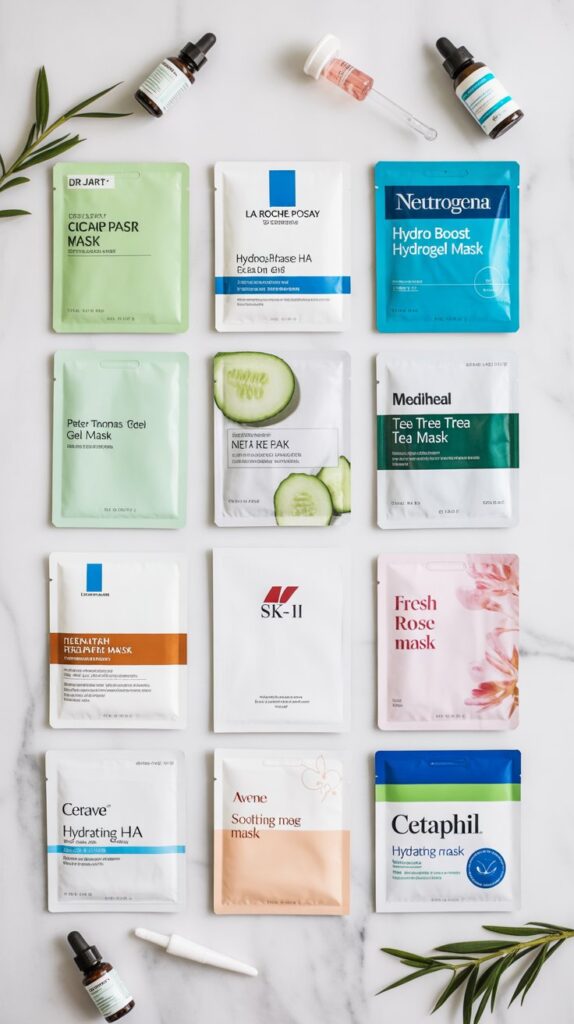
Dr. Jart+ Cicapair Tiger Grass Color Correcting Mask
Dermatologists recommend this mask for sensitive and irritated skin. The tiger grass extract (Centella asiatica) reduces redness and calms inflammation quickly. This ingredient has proven healing properties that repair damaged skin barriers. Skin feels cooler and less reactive after using this mask.
La Roche-Posay Hydraphase Intense Hyaluronic Acid Face Mask
Dermatologists trust La Roche-Posay for sensitive skin care. This mask contains fragrance-free hyaluronic acid that hydrates without causing reactions. The formula goes through strict dermatological testing. People with eczema and rosacea can use this mask safely.
Neutrogena Hydro Boost Hydrating Hydrogel Mask
Dermatologists suggest this affordable option for all skin types. The hydrogel material feels cooling and delivers hyaluronic acid deep into your skin. This mask contains no dyes, fragrance, or oils that might irritate your face. Your skin stays hydrated for up to 24 hours after one use.
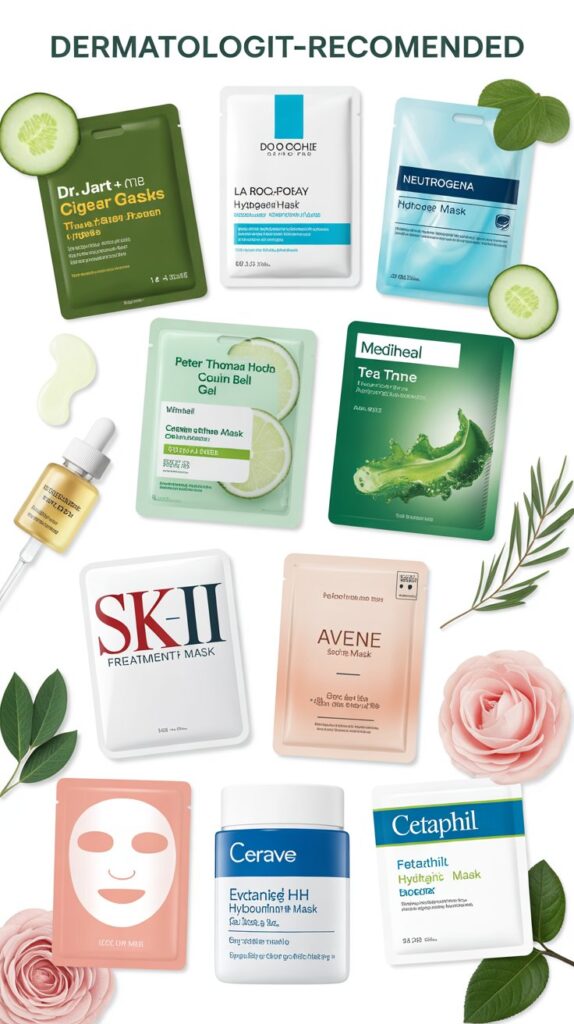
Peter Thomas Roth Cucumber Gel Mask
Dermatologists recommend this mask for calming puffy and tired skin. Cucumber extract reduces swelling around your eyes and face. The gel texture feels refreshing and doesn’t clog pores. This mask suits people who need gentle hydration without heavy ingredients.
Mediheal Tea Tree Care Solution Mask
Dermatologists approve this mask for acne-prone skin. Tea tree oil has natural antibacterial properties that fight breakouts without harsh chemicals. The mask also contains salicylic acid in safe amounts to unclog pores. Regular use helps prevent new pimples and reduces existing inflammation.
SK-II Facial Treatment Mask
Dermatologists recognize SK-II’s Pitera essence as an effective ingredient for skin renewal. This luxury mask contains over 90% Pitera, which improves skin texture and reduces fine lines. The formula helps your skin absorb nutrients better and speeds up cell turnover.
CeraVe Hydrating Hyaluronic Acid Face Mask
Dermatologists developed CeraVe products with skin health in mind. This mask contains three types of ceramides that strengthen your skin barrier. Hyaluronic acid adds moisture while niacinamide brightens and evens your skin tone. The non-comedogenic formula works well for sensitive and acne-prone skin.
Avene Soothing Sheet Mask
Dermatologists recommend Avene for reactive skin that gets red easily. This mask uses thermal spring water that has natural soothing properties. The formula contains minimal ingredients to reduce the risk of allergic reactions. Your skin feels calm and comfortable after removing this mask.
Fresh Rose Face Mask
Dermatologists approve this mask for its hydrating and toning benefits. Real rose petals infuse the serum with antioxidants that protect your skin. Rosewater balances your skin’s pH and tightens pores gently. This mask suits normal to dry skin types that need a moisture boost.
Cetaphil Hydrating Sheet Mask
Dermatologists trust Cetaphil for gentle and effective skincare. This mask contains hyaluronic acid and vitamin E, which work together to hydrate and protect your skin. The fragrance-free formula suits people with very sensitive skin who react to most products. Your face feels soft without any greasy residue.
Budget-Friendly Options That Work
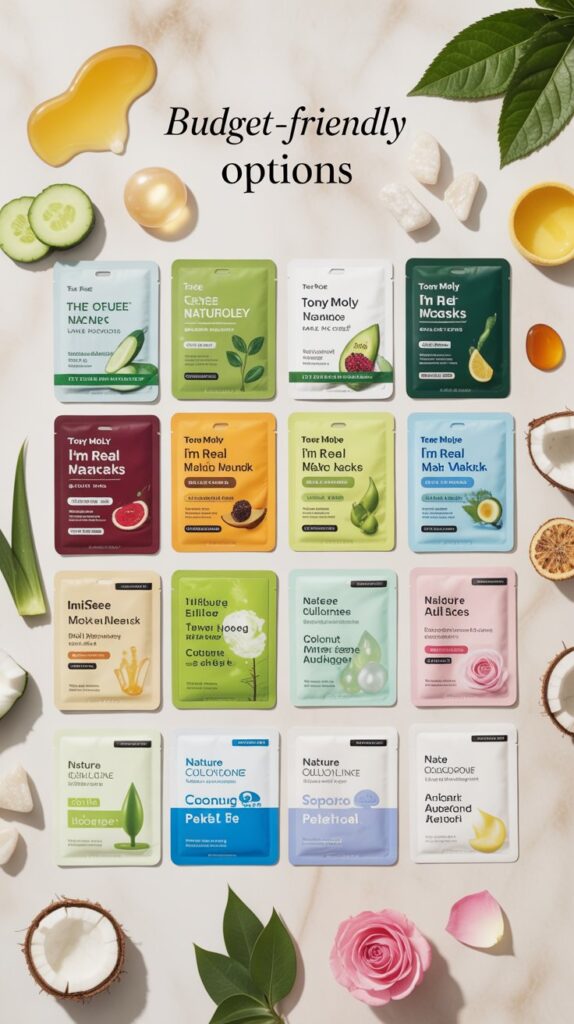
You can find quality sheet masks that work well without spending a lot of money. Many affordable brands contain the same active ingredients as luxury options but cost just one to three dollars per mask.
Under One Dollar Masks
- The Face Shop Real Nature Mask Sheet gives you great results for less than two dollars. Cucumber hydrates dry skin while green tea controls oil production. Pomegranate brightens dull complexions, and rice evens out your skin tone.
- Tony Moly I’m Real Mask Sheet costs around one dollar and comes in multiple options. Red wine contains antioxidants for aging skin. Avocado nourishes dry patches deeply. Lemon brightens dark spots, and aloe soothes irritation.
- Etude House 0.2 Therapy Air Mask uses a thin lightweight material that helps ingredients absorb faster. These one-dollar masks stick better to your face than thick cotton sheets. Madecassoside calms redness, collagen firms skin, and hyaluronic acid provides deep hydration.
Two to Three Dollar Range
- Innisfree My Real Squeeze Mask uses fresh natural ingredients for about one dollar each. Bija seed treats acne and reduces inflammation. Manuka honey moisturizes and heals damaged skin. Tea tree fights bacteria and prevents new breakouts.
- Leaders Insolution Daily Wonders Mask performs like expensive brands but costs only two to three dollars. Teatree Relaxing controls oil and treats acne. Coconut Gel Bio-Cellulose hydrates dry skin deeply. Aquaringer Skin Clinic repairs damaged moisture barriers with advanced materials.
Multi-Pack Value Options
- Naisture Collagen Essence Mask Pack offers 16 different masks for around 15 dollars. Each mask addresses specific concerns like brightening, firming, or hydrating. Pearl extract lightens dark spots, snail mucin heals acne scars, and green tea reduces redness.
- Sephora Collection Sheet Masks provide quality ingredients for three to four dollars. Rose hydrates and tones skin while lotus calms sensitivity. Pearl brightens dark spots, and avocado nourishes dry patches.
Storage and Shelf Life
Proper Storage Locations
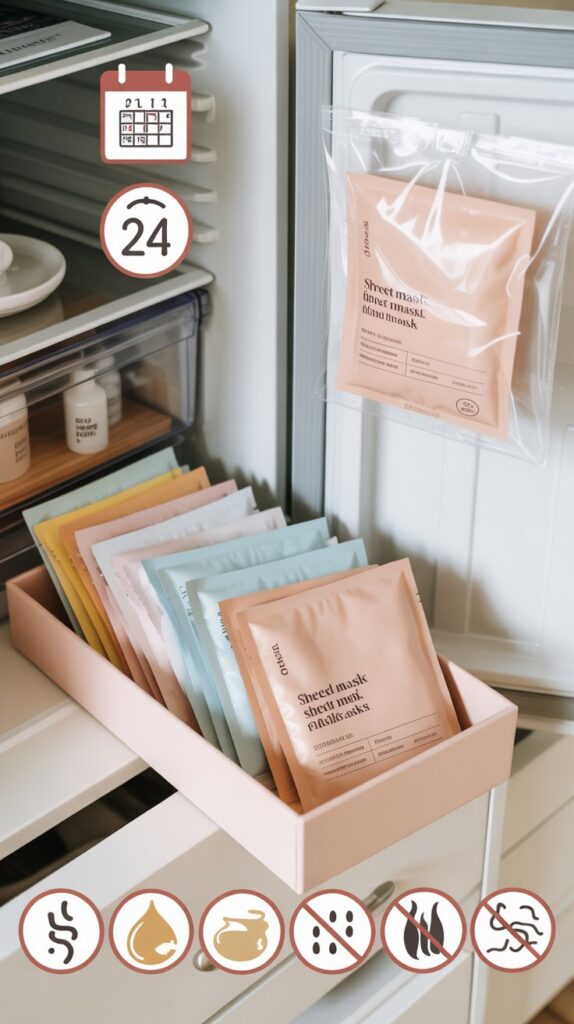
- Store your sheet masks in a cool, dry place away from direct sunlight. Heat and moisture can break down the active ingredients and make them less effective. A bathroom cabinet or bedroom drawer works well as long as the area stays dry.
- Keep masks away from heaters, windows, and humid areas. High temperatures can cause the serum to evaporate or change texture. Sunlight can degrade ingredients like vitamin C and retinol that lose their power when exposed to light.
- Store masks flat instead of standing upright. This keeps the serum distributed evenly across the entire sheet. Storing them on their side can cause all the liquid to pool in one corner.
Understanding Expiration Dates
- Most sheet masks last 12 to 24 months when stored properly. Check the expiration date printed on the package before buying or using any mask. The date usually appears on the back or bottom of the packet.
- Unopened masks stay fresh longer than opened ones. Once you open a packet, you must use the mask immediately. The serum starts drying out within minutes of exposure to air.
- Using expired masks can irritate your skin and cause breakouts. Old serums develop bacteria that can infect your pores. Expired ingredients also lose their benefits, so you won’t see any positive results.
Signs Your Mask Has Gone Bad
- Check for changes in smell before applying any mask. Fresh masks have a light, pleasant scent or no smell at all. Expired masks smell sour, moldy, or unusually strong.
- Look at the serum color and texture. Good serum appears clear or slightly tinted based on the ingredients. Cloudy, separated, or discolored serum means the mask has gone bad.
- Feel the packet before opening it. The mask should feel moist and full of liquid. Dry or nearly empty packets indicate the serum has evaporated, and the mask won’t work properly.
Refrigerating Sheet Masks
- You can store sheet masks in the refrigerator for an extra cooling effect. Cold masks feel especially nice on hot days or after sun exposure. The cool temperature also helps reduce puffiness and calm inflammation.
- Place masks in a sealed plastic bag before refrigerating them. This prevents them from absorbing food odors and keeps them sanitary. Store them in the door or on a shelf away from raw foods.
- Take the mask out of the fridge five minutes before using it if you prefer a less intense cold sensation. Very cold masks can feel uncomfortable on sensitive skin at first.
Common Mistakes to Avoid
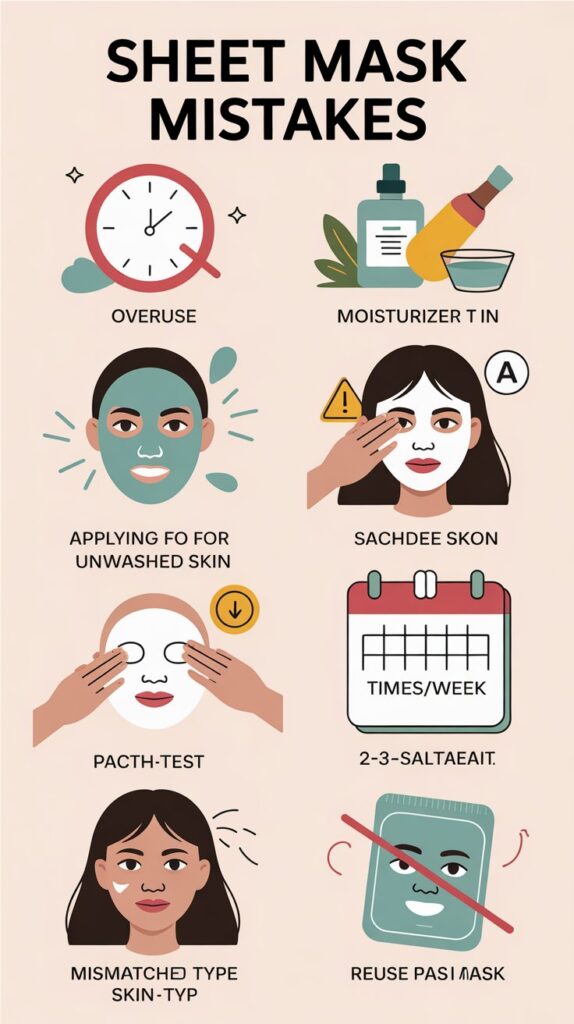
- Leaving the mask on too long dries out your skin. Masks start pulling moisture back after 20 minutes instead of adding it.
- Skipping moisturizer after removal lets the serum evaporate. Your skin loses all the benefits within an hour without sealing it in.
- Applying masks to dirty skin traps bacteria and oil against your face. This causes breakouts instead of improving your skin.
- Rubbing or moving the mask around irritates your skin. Press it gently once and leave it still.
- Using masks every day overloads your skin with ingredients. This causes redness and sensitivity. Stick to two or three times per week.
- Not patch testing new masks can cause allergic reactions. Test behind your ear first before applying to your whole face.
- Ignoring your skin type makes problems worse. Oily skin masks dry out already dry skin even more.
- Reusing single-use masks spreads bacteria. Sheet masks work for one application only.
Conclusion;
Sheet masks provide a simple and effective way to improve your skin without spending hours on complicated routines. Choosing the right mask for your skin type and using it correctly makes a real difference in the results you see. Budget-friendly options work just as well as expensive brands when they contain quality ingredients like hyaluronic acid, niacinamide, and natural extracts.
Using masks two to three times per week gives your skin the boost it needs without overwhelming it. Store your masks properly, avoid common mistakes like leaving them on too long, and always follow up with moisturizer to lock in the benefits. With consistent use and the right approach, sheet masks can help you achieve healthier, brighter, and more hydrated skin that looks and feels better every day.